
Authority AI Editorial
What an Agent Harness Is, and When to Start From a Ready-Made One
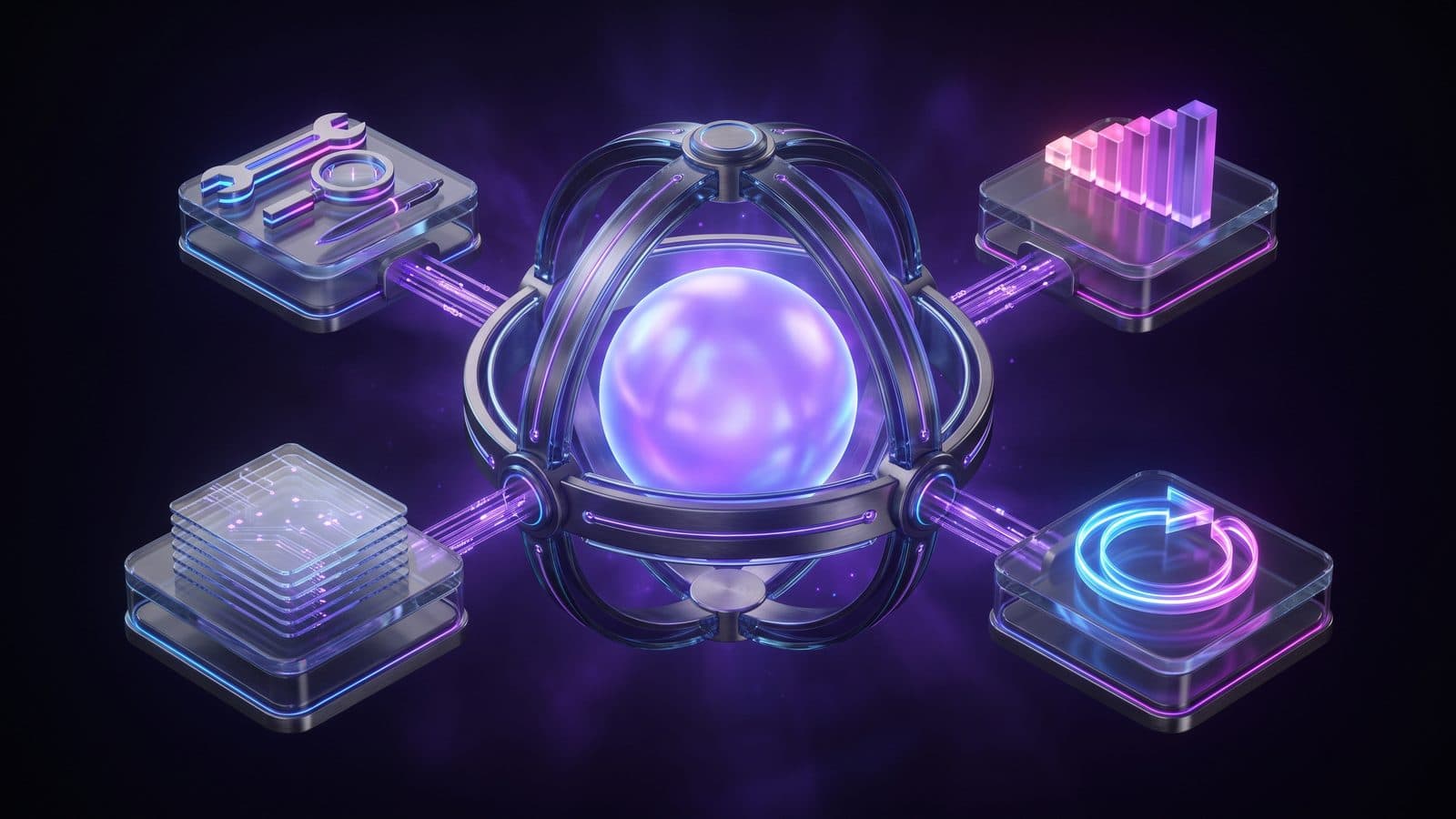
People talk about AI agents as if the model were the whole thing. Pick the cleverest model, the thinking goes, and the work comes back good.
The model matters, but on its own it only reads text and writes text. It can't open your documents, search the web, check its own work or remember what it did an hour ago. Everything that lets it do those things is built around it, and that surrounding setup has a name: the harness.
What a harness is
Think of a good restaurant kitchen. The chef is talented, and nobody doubts that. But the chef works inside a kitchen someone set up: the stations, the knives in their places, the recipe cards, the rail where orders arrive, the notes the morning shift leaves for the evening one. Put the same chef in an empty room with a camping stove and the food gets worse. The chef didn't change. The kitchen did.
The model is the chef. The harness is the kitchen.
A beginner's guide on DataCamp puts it in one line: "an agent harness is the software around a language model." It sums the idea up as a formula, Agent = Model + Harness, and is careful to call that "a mental model, not an industry standard." The word is still loose, but the idea underneath is steady.
What a harness holds
Most harnesses, whoever builds them, are made of the same handful of parts.
- The tools. What the agent is allowed to use: reading and writing documents, searching the web, running a program, opening a browser. Without tools, the agent can only talk.
- The loop. The agent takes a step, looks at what happened, and decides the next step. The harness runs that cycle and decides when it stops.
- The starting instructions. The standing orders the agent begins every job with, plus the skills it can call on: written methods for particular kinds of work.
- The memory. How the agent keeps track of a long job, so the work done on Tuesday is still known on Wednesday.
- The rules. What the agent may do on its own and what needs your say-so first.
Anthropic's own kit for people building agents is a fair example of most of these parts in one place. Its documentation says it gives builders the same tools and the same working loop that Claude Code runs on, along with permission settings, saved sessions and skills.
Why the same model behaves differently in different harnesses
Two people can use the same model and get very different work back, and the harness is often why.
Anthropic's engineers made this point in their 2024 guide to building agents. They describe the basic building block as a model given extra abilities: looking information up, using tools and keeping a memory. They also say it is "crucial for the agents to gain 'ground truth' from the environment at each step." In plain terms, the agent should check what actually happened after each action, not assume. And they recommend stopping conditions, such as a maximum number of steps, so a person stays in control.
Each of those is a harness decision. Whether the agent can see the result of its last step, whether it has a way to check its work, when it is told to stop. A model with no way to look at its own output can keep going confidently in the wrong direction. Give it a way to look, and it can correct itself.
The DataCamp guide makes the same point from the other side: choosing a harness is "increasingly a separate decision from picking the right model."
What long jobs teach about harnesses
The harness matters most when a job is too big to finish in one sitting.
In November 2025, Anthropic's engineering team wrote about exactly this problem. An agent working on a large job runs out of room in its working memory and has to carry on in a fresh session. The trouble, in their words, is that "each new session begins with no memory of what came before." They compare it to a project staffed by people working in shifts, where each new person arrives with no memory of the last shift.
Two failures showed up again and again. The agent tried to do too much at once, ran out of room halfway through, and left the next session a half-built piece of work with no notes. Later, a fresh session would look at the progress so far and decide the whole job was finished when plenty was still missing.
The fixes weren't a cleverer model. They were changes to the harness. The first session wrote out a full list of everything the finished job needed, each item marked as not done. Every later session started by reading the progress notes, picked one unfinished item, did it properly, checked it, and left clear notes for the next shift. That's what any well-run team does with a handover, written down so the agent follows it too.

When to start from a ready-made harness
Building a harness means choosing the tools, writing the starting instructions, deciding how memory works, setting the rules and wiring them together. Then you test it until it behaves. Anthropic's account of the long-running agent is a good picture of how much thought goes into getting one right for one kind of work.
Starting from a harness that already runs makes sense when:
- The job is a common one, such as research, writing or working through a list of tasks, and someone has already set up an agent for it.
- You want to see an agent doing your kind of work today, then adjust, rather than design every part first.
- You aren't sure which setup suits you, and trying two or three working ones will teach you more than reading about them.
Here's an illustration, not a logged run. Say you want an agent that gathers what competitors published each week and writes you a short summary. You could build that from parts. Or you could start from a research setup that already has web search, a source-checking method and a notes step wired in, run it once on your competitors, and spend your time on the parts that are specific to you.
When building your own is the right call
A ready-made harness is a starting point, not a ceiling. Anthropic's guide recommends starting simple and adding parts only when they're needed, and warns that ready-made frameworks can add layers that hide what the agent is actually being told.
Build your own, or rebuild a ready-made one heavily, when:
- Your job has steps nobody else does, and they matter more than anything a general setup offers.
- The agent needs to reach your own tools or records, and only you know how they fit together.
- You need to be able to explain every rule the agent follows, line by line.
Some people do both: start from a harness that runs, learn what they need, then rebuild the parts that matter to them.
Where skills fit
A harness decides what an agent can use and how it works through a job. Skills decide how it does a particular kind of work once it's there.
The two go together. A research harness with no research method still produces thin research. A good method with no way to search the web can't be followed. Anthropic's agent kit loads skills the same way Claude Code does.
Where to start
Write down one job you'd like an agent to handle from start to finish. Then answer five questions about it. Which tools does it need? Where does it check its own work? What should it remember from one session to the next? What must it ask you before doing? When should it stop?
Those answers are your harness, described in plain words. If someone has already built one that matches most of them, start there and change the rest.
If you'd like to try that, the Agent Harness Collection is about 40 curated harnesses across 6 categories. Sixteen of them run within minutes of download, and about 24 more are starter setups with one working task each. Skills from the collection come pre-wired, every harness has setup notes, and it ships with a Choosing a Harness guide.
For the methods themselves, the AI Ultimate Skill Collection is 3,029 ready-made skills sorted into 12 packs, one for each kind of work, such as coding, research or finance, and it works with Claude Code and other agents that use skills.